
Plate V · Cutting & Craft
How a Cabochon Is Cut, and Why It Is the Older Art
Faceting is four hundred years old. Domed stones are five thousand, and for a lot of material they are still the right answer.
The order of operations
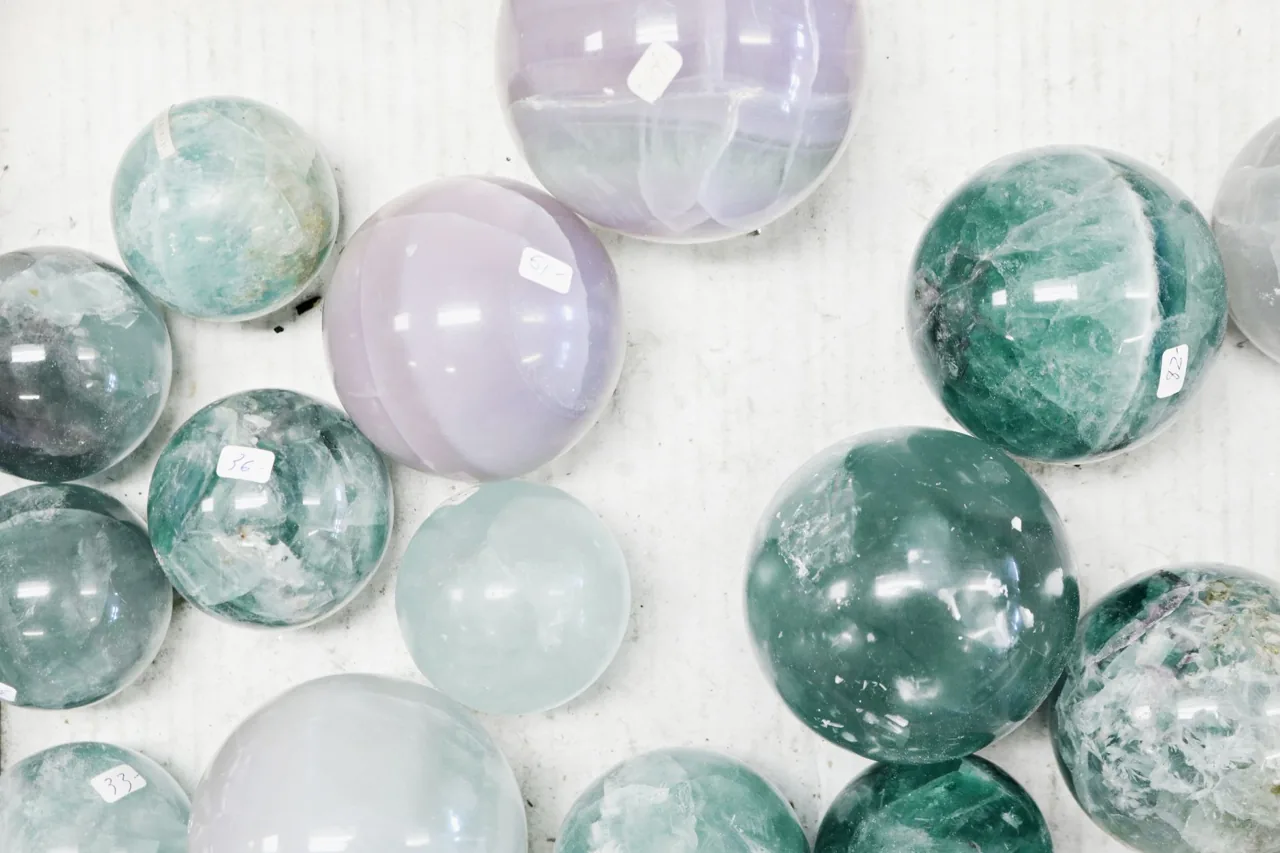
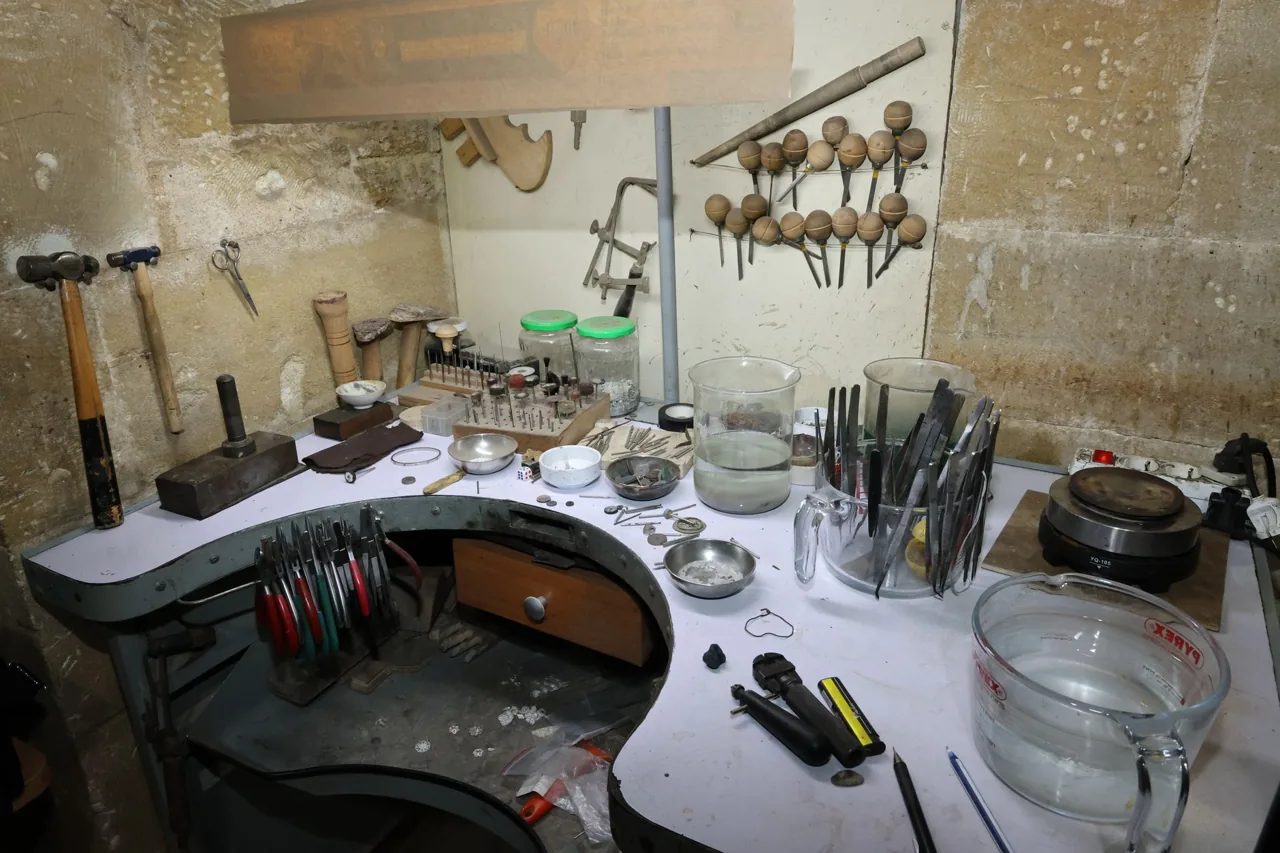
A cabochon starts as a slab. The cutter draws the outline with a template, trims it close on a saw, then grinds the shape true on a coarse wheel against a metal or plastic dop stick that the stone is waxed onto.
The dome comes next, worked in stages from the edge inward so the curve stays even. Then the girdle is trued, the back is flattened or slightly domed, and the whole thing runs through progressively finer grits before polishing on leather or felt with cerium or diamond compound.
Nothing about it is complicated. All of it is judgement, and the judgement is mostly about where to put the top of the dome.
Reading the rough before touching it
The decisions that matter happen before the wheel is switched on. Where is the colour concentrated. Where does the sheen or the star sit. Which way do the inclusions run, and can they be hidden under the girdle rather than left in the middle of the dome.
In a chatoyant stone like tiger eye or a star sapphire, the fibrous structure has one orientation that produces the effect and every other orientation wastes it. Getting this wrong is not a small loss of quality, it is the difference between a stone and a pebble.
The old lapidary rule is that the rough tells you the shape. This sounds mystical and is entirely practical: fighting the material to hit a standard oval costs weight, costs colour and usually costs the effect as well.
Why domes suit some material and facets suit others
Facets work by total internal reflection. Light enters the top, bounces off the back facets and comes back at you. That only works in transparent material with a decent refractive index, and it only works if the stone is cut to angles the material dictates.
Translucent and opaque material cannot do that. Light does not travel cleanly through it, so faceting it produces a dull stone with a lot of small dark windows. A dome instead gathers light at the surface and shows the body colour, the sheen, the star or the play of the material itself.
So the rule is not that cabochons are the cheap option. It is that they are the correct option for anything that is not cleanly transparent, and a great deal of the world's most interesting gem material is not.
The beads question
A bead is a cabochon problem solved twice, and drilling is where most of the loss happens. A drill entering a stone under stress finds every plane of weakness in it, which is why bead material is graded partly on how forgiving it is under a drill rather than only on how it looks.
This is also why bead strands are more uniform in material than in colour. A run of a hundred beads has to survive a hundred drillings, so the cutter selects for structural consistency first.
Gem-A runs practical courses on all of this and their published material is a good starting point for anyone who wants to try it rather than read about it.
Ishara Wijesinghe · 6 March 2026